

Business travel costs in 2026: what actually changed
Business travel costs in 2026 are shaped by dynamic pricing, tighter corporate budgets, and smarter tools that reward flexible, data‑driven travellers. The people who spend less aren’t chasing secret promo codes; they understand how prices move and follow a simple, repeatable process every time they book.
Across major U.S. cities, benchmark data shows how real the pressure is. Business Travel News’ 2025 Corporate Travel Index reports steady increases in hotel and car rental rates in key markets, driven by demand rather than flat annual hikes. Meanwhile, the Global Business Travel Association projects global business travel spend reaching about $1.57 trillion in 2025, moving past previous records and putting more scrutiny on every line item.
For Bay Area professionals flying in and out of SFO or OAK, this plays out in familiar ways: higher nightly hotel rates near financial districts, pricier last‑minute rides to and from the airport, and dynamic airfares that jump based on departure day and booking window. The gap between informed and uninformed travellers has widened because pricing changes faster than gut instinct.
The good news is that you do not need a complex corporate travel program to land on the right side of those numbers. You need a short checklist, a willingness to adjust when the data tells you to, and a habit of comparing options instead of defaulting to whatever you used last quarter.
Use flexibility as your biggest cost advantage
Flexible dates and times are the single most powerful lever for lowering business travel costs without downgrading your experience. Prices for flights and hotels move constantly based on demand, booking window, and day of week, so locking into one exact departure time usually means paying a premium for convenience you might not actually need.
In practice, flexibility starts with expanding your search window. Instead of checking only the exact day you plan to leave, compare at least three days on either side. Many route searches clearly flag cheaper days; a Tuesday night flight into SFO may be significantly less than a Sunday evening arrival. When possible, travel on off‑peak days—midweek rather than Monday morning or Friday afternoon—where corporate demand is lower.
Hotel bookings work the same way. Corporate negotiated rates may be stable, but public inventory still moves. The Emburse Business Travel Snapshot for 2025 notes that average negotiated hotel rates sit around $209 per night in North America with a modest 1.4% year‑over‑year increase. That average hides meaningful swings between high‑demand nights and shoulder dates within the same week.
If you control your schedule, anchor meetings around cheaper travel days instead of fixing the meeting first and paying whatever the airfare happens to be. For internal trips, push for virtual meetings when flights cross a certain price threshold, and travel when the data makes sense. Over a year of recurring trips, this habit alone can cut total spend by thousands without any change in travel quality.
Stop ignoring the true cost of ground transportation
Ground transportation is the quiet budget leak of many trips. Travellers obsess over flights and hotel rates, then casually accept whatever ride price appears when they step out of SFO or OAK—often during local rush hour or surge pricing windows.
Airport surcharges, tolls, and peak‑period multipliers add up fast, especially for frequent travellers. BTN’s cost data shows taxi and ride‑hail rates as a meaningful share of daily per‑diem spend in U.S. cities, yet this is the category most people plan the least. Ignoring it effectively hands part of your trip budget to the algorithm.
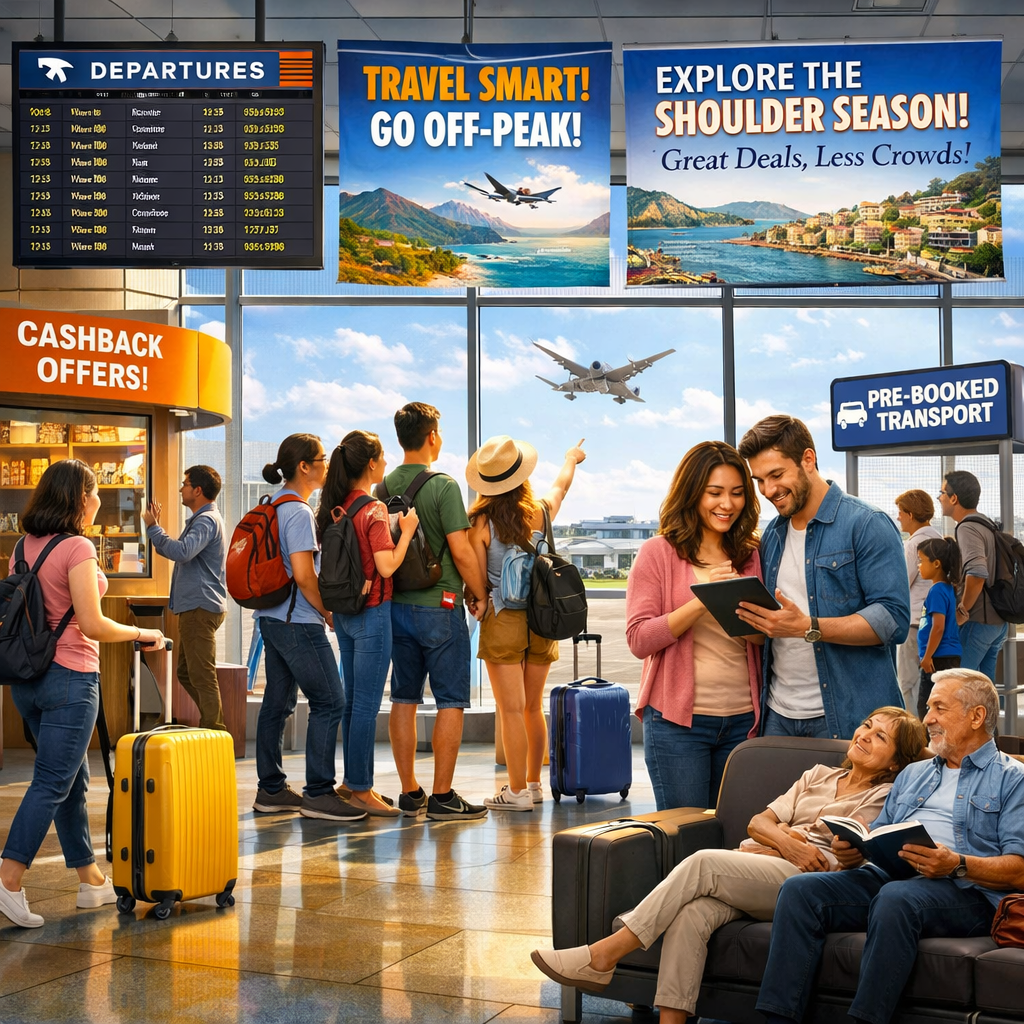
A better approach is to treat your airport legs like any other booked component. For late‑night arrivals, pre‑booking a transfer or car service with a fixed price can beat surge‑heavy on‑demand rides. When travelling with colleagues, booking a larger vehicle and splitting the cost often undercuts paying for multiple individual rides—while giving everyone one fewer thing to manage after a long flight.
If you frequently shuttle between downtown San Francisco, Oakland, and the airports, build a short list of preferred options at different price points: premium EV service when schedule certainty really matters, and a reliable, lower‑cost option for routine departures. The key is deciding before you travel, not while standing at the curb with a bag in one hand and a dead phone in the other.
Let data, cashback and rewards quietly do the heavy lifting
Once you’ve tackled timing and ground transport, the next gains come from using data, cashback, and rewards consistently—not occasionally. One‑off deal hunting feels satisfying; quiet, automatic savings win over a whole year of travel.
Start with hard numbers. Resources like BTN’s Corporate Travel Index and reports such as the Emburse Business Travel Snapshot give you realistic benchmarks for hotel and car costs in specific cities. If your regular New York hotel is far above the benchmark for similar properties, that’s a signal to look at alternatives or renegotiate corporate rates.
Next, layer in cashback tools for bookings you would make anyway. Many platforms offer 2–5% back on hotels, car rentals, and activities. One reservation earns a small amount; fifty reservations across a team turn into a serious offset against travel spend. The impact comes from discipline—activating cashback for every eligible booking, not just when you remember.
Finally, consolidate loyalty where it genuinely pays off. For example, picking one primary hotel chain and one airline alliance for most trips accelerates status, which then returns value in upgrades, late checkouts, or fee waivers. Combined with cashback and solid rate shopping, rewards become a bonus on top of already‑sensible prices, not a reason to overpay.
Time your trips and design itineraries for value
Timing is not just about the day of the week—it’s about seasonality and how you structure the trip itself. The classic advice still applies: shoulder seasons usually provide the best price‑to‑experience trade‑off for both leisure and blended "bleisure" travel.
In many European cities, April–May and September–October consistently offer lower rates and fewer crowds than peak summer, without sacrificing weather or experience. For popular parts of Southeast Asia, avoiding the December–February surge from northern hemisphere travellers can significantly improve both price and availability. These patterns are widely known and still effective because organisational calendars and event schedules keep most travellers bunched into the same windows.
For Bay Area‑based professionals, this matters in two ways. First, be intentional about when you schedule offsites, conferences, and client visits that you control—nudging them into slightly less popular weeks when venues and rooms are easier to negotiate. Second, design itineraries that minimise back‑and‑forth flying. Combining multiple client visits into one regional swing, rather than three separate trips from SFO or OAK, trades a single slightly longer journey for substantial airfare savings.
Inside each trip, resist the temptation to over‑schedule. Extra nights in‑destination that serve no real purpose quietly drain budget. Align your agenda so that each extra day has a clear objective—client work, internal meetings, or genuine rest—rather than simply filling space between poorly planned flight times.
Build a simple, repeatable playbook for every work trip
The biggest savings do not come from a single spectacular deal; they come from a repeatable system you can run in under 30 minutes every time a trip appears on your calendar. A light, personal playbook protects your budget even when you’re busy.
A practical version might look like this:
- Step 1: Check timing. Search flights across a three‑ to five‑day window and compare SFO vs. OAK where relevant. Shift meetings when the savings justify it.
- Step 2: Benchmark rates. Glance at current corporate or market benchmarks using a trusted index or your company’s travel data. Flag anything that is wildly off‑trend.
- Step 3: Lock in ground transport. Decide how you are getting to and from the airport on both ends before you travel. Pre‑book when prices are predictable.
- Step 4: Activate cashback and loyalty. Turn on cashback for every eligible booking and favour your main airline and hotel partners when prices are comparable.
- Step 5: Sanity‑check the itinerary. Remove unnecessary nights and redundant segments; combine meetings where possible.
Over a year of recurring trips, that five‑step routine quietly compounds into lower business travel costs, fewer last‑minute scrambles, and a better on‑the‑ground experience. You are not trying to game the system; you are simply choosing not to be the traveller who pays the highest price for the same seat, the same room, and the same ride.